Feature news

Hans {The black NAZI}


Question: Have you ever seen a black Nazi ... wearing a sweater vest? Well you have now. The little boy in the center of the picture above is Hans Massaquoi, one of the few biracial Germans who were born and raised under the Nazi regime. So if you ever feel like you were born in the wrong time and place in history, shut up, because unless you're a black child goose-stepping around with a swastika sewn to your sweater, you have no idea what it means to be in the wrong place at the wrong time.

.
Hans was born in Hamburg in 1926, the son of a German nurse and a Liberian law student whose dad happened to be the Liberian consul for Germany. Not long after his birth, Hans' father and grandfather both moved back to Africa, leaving the little boy and his mom to navigate through the ins and outs of living under an Aryan regime on their own. Both the title and the picture above are a little misleading, though, because Hans never actually made it into the Nazi Party, although he tried. In third grade, Hans was so eager to prove that he was a good German that he persuaded his babysitter to sew a swastika onto his sweater. His ...
Learn more »

10 Things You Didn’t Know About Author Chimamanda Ngozi Adichie


TheGuardian.com
Chimamanda Ngozi Adichie is considered one of the Nigeria’s most prominent young authors, and now commands an international audience. Most recently, she made headlines upon the release of the film adaptation of her novel, “Half of a Yellow Sun,” as well as for the recent publication of her third novel, “Americanah.” As Adichie’s body of work grows, take a peek at her life: 10 things you didn’t know about author Chimamanda Ngozi Adichie.


                                                    She comes from a long line of strong women

TheRumpus.net
Adichie’s mother was the University of Nigeria’s first female registrar, serving as the head of the administrative section of the university. Her sister operates a medical practice in Coventry, Connecticut.


Ebony.com


Adichie was known to butt heads with her teachers growing up

Adichie’s strong personality would occasionally put her in conflict with teachers while she was growing up in Nsukka, Nigeria, near the University of Nigeria. Despite this, she                                                                        remained an A student and received numerous academic                                                            awards

FevaTV.com

She has become known as a fashion icon

Adichie’s mother was always very concerned about her daughter’s appearance, and instilled the same value in her children. When Adichie first burst onto the writing scene in the U.S., she tried to dress more subdued in an attempt to be taken seriously, but soon realized that her personal style had the right to shine through

BooksLive.co.za

She dropped out of medical school to pursue writing

Following her father’s wishes, Adichie enrolled in medical school in Nigeria, but dropped out at age 19 to attend Drexel University in Philadelphia on a scholarship. She ended up graduating from Eastern Connecticut State University with a degree in communication and political science

Re-ThinkingAfrica.Blogspot.com

She was inspired by Chinua Achebe

After reading Chinua Achebe’s “Things Fall Apart,” Adichie was inspired by seeing her own life represented in the pages. She once said, “I realized that people who looked like me could live in books.” Using that inspiration, Adichie has been writing about the Nigerian experience throughout her career.

Sueddie.Wordpress.com

She grew up in a house once owned by Achebe

Adichie and her family lived in a home in Nsukka that was once owned by Chinua Achebe, further strengthening the connection between the two Igbo literary legends. A Nigerian novelist, poet, professor, and critic, Achebe was best known for his first novel and magnum opus, “Things Fall Apart,” — the most widely read book in modern African literature. He died in 2013 in Boston, Massachusetts

Blogs.Yis.AC.jp
             Her novel, “Half of a Yellow Sun,” derives its name from the             Biafra flag

              The novel, “Half of a Yellow Sun,” is set before and during the                  Biafran and its title reflects the flag of the short-lived independent              nation. The film adaptation, directed by Biyi Bandele,           stars                Chiwetel Ejiofor (“12 Years a Slave”) and Thandie
Learn more »

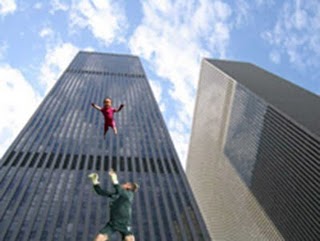
COULD THIS BE TRUE??? A falling baby, saved two times by the same man !!!

There once was a man was hit on the head by a falling baby… twice!

According to Time Magazine (Miscellany, Oct. 17, 1938), the year of the first event was 1937. Joseph Figlock, a local street sweeper in Detroit, Michigan, was walking down the road when a baby fell from a 4th story window. The baby struck him on the head and shoulders. The tackling toddler was thankfully not killed. However, he and Mr. Figlock were both injured.
The following year, another mother of the year candidate, allowed her 2 year old son David Thomas, to fall from a window. Joseph, doing his job sweeping out an alley, was again struck by the tumbling tyke. Remarkably, once again neither the ankle-bitter nor the newborn nabber were killed.
Joseph must be some catch, both figuratively and literally. Not only can he ensnare small children like a German Shepard at a Frisbee throwing competition, but women seem to toss their offspring at him like rice at a wedding! One thing is for sure, if you lived in Detroit in the 1930s and you threw your baby out with the bathwater, Mr. Joseph Figlock was going to be there to save the day!
+kofacts raph Thanks for reading!
Learn more »

10 AMAZING FACTS WHICH YOU DID NOT KNOW!!

  • The world's youngest parents were 8 and 9 and lived in China in 1910

  • The Los Angeles Rams were the first U.S. football team to introduce emblems on their helmets.

  • Our eyes are always the same size from birth, but our nose and ears never stop growing.

  • Hershey's Kisses are called that because the machine that makes them looks like it's kissing the conveyor belt.

  • Chop-suey does not come from China. It was created by Chinese immigrants in California

  • Chocolate is the number one food stuff flavor in the world, beating vanilla and banana by 3-to-1.

  • Valentine's Day originates from the ancient Roman
Learn more »

Earthquakes Seismic Destruction

Earthquakes, also called temblors, can be so tremendously destructive, it’s hard to imagine they occur by the thousands every day around the world, usually in the form of small tremors.
Some 80 percent of all the planet's earthquakes occur along the rim of the Pacific Ocean, called the "Ring of Fire" because of the preponderance of volcanic activity there as well. Most earthquakes occur at fault zones, where tectonic plates—giant rock slabs that make up the Earth's upper layer—collide or slide against each other. These impacts are usually gradual and unnoticeable on the surface; however, immense stress can build up between plates. When this stress is released quickly, it sends massive vibrations, called seismic waves, often hundreds of miles through the rock and up to the surface. Other quakes can occur far from faults zones when plates are stretched or squeezed.
Scientists assign a magnitude rating to earthquakes based on the strength and duration of their seismic waves. A quake measuring 3 to 5 is considered minor or light; 5 to 7 is moderate to strong; 7 to 8 is major; and 8 or more is great.
On average, a magnitude 8 quake strikes somewhere every year and some 10,000 people die in earthquakes annually. Collapsing buildings claim by far the majority of lives, but the destruction is often compounded by mud slides, fires, floods, or tsunamis. Smaller temblors that usually occur in the days following a large earthquake can complicate rescue efforts and cause further death and destruction.
Loss of life can be avoided through emergency planning, education, and the construction of buildings that sway rather than break under the stress of an earthquake.
Learn more »

African Elephant Loxodonta africana

African elephants are the largest land animals on Earth. They are slightly larger than their Asian cousins and can be identified by their larger ears that look somewhat like the continent of Africa. (Asian elephants have smaller, rounded ears.)
Elephant ears radiate heat to help keep these large animals cool, but sometimes the African heat is too much. Elephants are fond of water and enjoy showering by sucking water into their trunks and spraying it all over themselves. Afterwards, they often spray their skin with a protective coating of dust.
An elephant's trunk is actually a long nose used for smelling, breathing, trumpeting, drinking, and also for grabbing things—especially a potential meal. The trunk alone contains about 100,000 different muscles. African elephants have two fingerlike features on the end of their trunk that they can use to grab small items. (Asian elephants have one.)
Both male and female African elephants have tusks they use to dig for food and water and strip bark from tre


es. Males use the tusks to battle one another, but the ivory has also attracted violence of a far more dangerous sort.
Because ivory is so valuable to some humans, many elephants have been killed for their tusks. This trade is illegal today, but it has not been completely eliminated, and some African elephant populations remain endangered.
Elephants eat roots, grasses, fruit, and bark, and they eat a lot of these things. An adult elephant can consume up to 300 pounds (136 kilograms) of food in a single day.
These hungry animals do not sleep much, and they roam over great distances while foraging for the large quantities of food that they require to sustain their massive bodies.
Female elephants (cows) live in family herds with their young, but adult males (bulls) tend to roam on their own.
Having a baby elephant is a serious commitment. Elephants have a longer pregnancy than any other mammal—almost 22 months. Cows usually give birth to one calf every two to four years. At birth, elephants already weigh some 200 pounds (91 kilograms) and stand about 3 feet (1 meter) tall.
African elephants, unlike their Asian relatives, are not easily domesticated. They range throughout sub-Saharan Africa and the rain forests of central and West Africa. The continent’s northernmost elephants are found in Mali’s Sahel desert. The small, nomadic herd of Mali elephants migrates in a circular route through the desert in search of water 

Learn more »

Tiger Salamander Ambystoma tigrinum


Tiger salamanders' markings are variable throughout their extensive range, but the most common marking resembles the vertically striped pattern of their mammalian namesake.
They are usually brown in color with brilliant yellow stripes or blotches over the length of their bodies. Their base color, however, can also be greenish or gray and their markings can be yellow dots or brown splotches. Some have no markings at all.
Thick-bodied amphibians with short snouts, sturdy legs, and long tails, tigers are the largest land-dwelling salamander on Earth. They can grow to 14 inches (35 centimeters) in length, but the average size is more like 6 to 8 inches (15.2 to 20.3 centimeters).
They are also the most wide-ranging salamander species in North America, living throughout most of the United States, southern Canada, and eastern Mexico. They live in deep burrows, up to two feet (60 centimeters) below the surface, near ponds, lakes, or slow-moving streams and are one of few salamanders able to survive in the arid climate of the North America interior.
Highly voracious predators, they emerge from their burrows at night to feed on worms, insects, frogs, and even other salamanders.
Their population is healthy throughout their range, but deforestation, pollution, and rising acidity levels in their breeding pools is affecting their distribution. Many are even killed by cars as they cross roads in the spring en route to or from their breeding sites.
Tiger salamanders are long-lived, averaging 10 to 16 years in the wild.
Learn more »